
Few names evoke the extravagance of 18th-century style quite like Marie Antoinette.
Think diamonds catching candlelight inside Versailles, strands of luminous pearls, elaborate bows, floral ornaments and jewels created not simply to accessorize an outfit, but to announce rank, taste and presence.
Yet the jewelry of Marie Antoinette's world tells a deeper story.
The 1780s and 1790s marked one of the most dramatic transitions in European fashion history. Within little more than a decade, France moved from the elaborate court culture of Versailles to revolution, political upheaval and a radically different approach to dress and adornment.
Jewelry changed with it.
And more than two centuries later, the fascination with jewels from another era remains at the heart of why collectors continue to seek antique and estate jewelry today.
Marie Antoinette: More Than a Fashion Icon
Born in Austria in 1755, Marie Antoinette arrived in France as a teenager and became Queen of France when Louis XVI ascended the throne in 1774.
Her clothing, interiors and personal style became enormously influential. In fact, her aesthetic has continued to inspire fashion, jewelry and decorative arts for more than two centuries. The Victoria and Albert Museum has described her as both a fashion icon of her own time and an enduring influence on designers and creatives long after the 18th century.
Jewelry was naturally part of that image.
At the royal court, precious stones did much more than sparkle. Jewelry communicated wealth, status and proximity to power. Diamonds became especially important during the 18th century as improvements in cutting allowed stones to reflect candlelight with greater brilliance. They were often mounted in silver over gold to emphasize their whiteness.
The result was a jewelry style designed for spectacle.
What Did Jewelry Look Like in the 1780s?
Look through surviving jewelry designs from the Louis XVI period and you begin to see a distinctive vocabulary.
Ribbon bows. Flowers. Tassels. Pearls. Garlands. Drop earrings. Brooches. Hair ornaments.
French design albums from the period show jewelry decorated with naturalistic flowers and leaves as well as elaborate ribbon motifs and asymmetrical forms.
Diamonds dominated formal court jewelry, while pearls brought a softer glow that complemented the silks, lace and powdered elegance associated with late-18th-century fashion.
The jewelry was often intricate without appearing rigid. A stone might hang from a delicate bow. Pearls could move beneath earrings. Floral motifs appeared to curl naturally around gemstones.
It was jewelry meant to come alive when worn.
And although very few intact diamond jewels from the period survive today, that rarity is part of their fascination. Precious stones were valuable enough that older pieces were routinely dismantled and reset when fashions changed.
In other words, jewelry has always had a second life.
The Necklace Marie Antoinette Never Owned
Perhaps no jewelry story from the era is more famous than the Affair of the Diamond Necklace.
Around 1785, Parisian jewelers Böhmer and Bassenge were trying to sell an extraordinary necklace incorporating hundreds of diamonds. According to The Metropolitan Museum of Art, the necklace contained approximately 540 diamonds and had originally been conceived during the reign of Louis XV.
Marie Antoinette was offered the necklace.
She declined.
Yet through an elaborate fraud involving Cardinal de Rohan and Jeanne de La Motte, the queen's name became connected to the purchase even though she had not ordered the jewel. When the scheme collapsed, Marie Antoinette's reputation was damaged by a scandal surrounding a necklace she had never actually owned.
It remains one of history's most remarkable examples of jewelry becoming something far bigger than an accessory.
A jewel became part of a national story.
From Versailles Sparkle to 1790s Simplicity
Then came the French Revolution.
By the beginning of the 1790s, the world that had produced the elaborate jewelry of Versailles was disappearing.
Marie Antoinette herself attempted to safeguard some of her jewels. In 1791, while the royal family was being held at the Tuileries Palace, some of her most valuable pieces were wrapped and sent out of France for safekeeping. A pair of surviving diamond bracelets associated with the queen remained intact through this extraordinary period and later resurfaced in a royal collection.
Fashion outside the palace was changing just as dramatically.
By the later 1790s, women's clothing increasingly embraced Neoclassical silhouettes inspired by the ancient world: high waists, lighter fabrics and cleaner lines. Fashionable women known as the Merveilleuses became associated with the striking new look of post-Revolutionary France.
Jewelry adapted to these changing silhouettes.
Instead of simply reproducing the visual weight of Versailles court dress, jewels increasingly worked with a more pared-back style. Personal taste, symbolism and the relationship between jewelry and the body became especially important.
Within a single generation, jewelry had moved from the glittering rooms of the Ancien Régime into a completely new cultural world.
Why We Are Still Fascinated by Jewelry From Another Era
Marie Antoinette's surviving jewels attract attention because of their rarity and royal history.
But you don't need royal provenance for an old jewel to be compelling.
That is one of the enduring pleasures of antique and estate jewelry.
A ring, brooch or necklace can reveal something about the period in which it was created: the stones people valued, the cutting techniques available, the motifs that were fashionable and the craftsmanship that could only be achieved by hand.
Sometimes a piece survives almost exactly as it was originally made.
Sometimes its stones have lived several lives.
And sometimes its previous owner is completely unknown.
That mystery is part of the appeal.
From the 1780s to Radiam: Jewelry That Carries a Past
The pieces found at Radiam generally come from later periods than Marie Antoinette's 18th-century world, but they belong to the same larger tradition of jewelry passing from one generation to another.
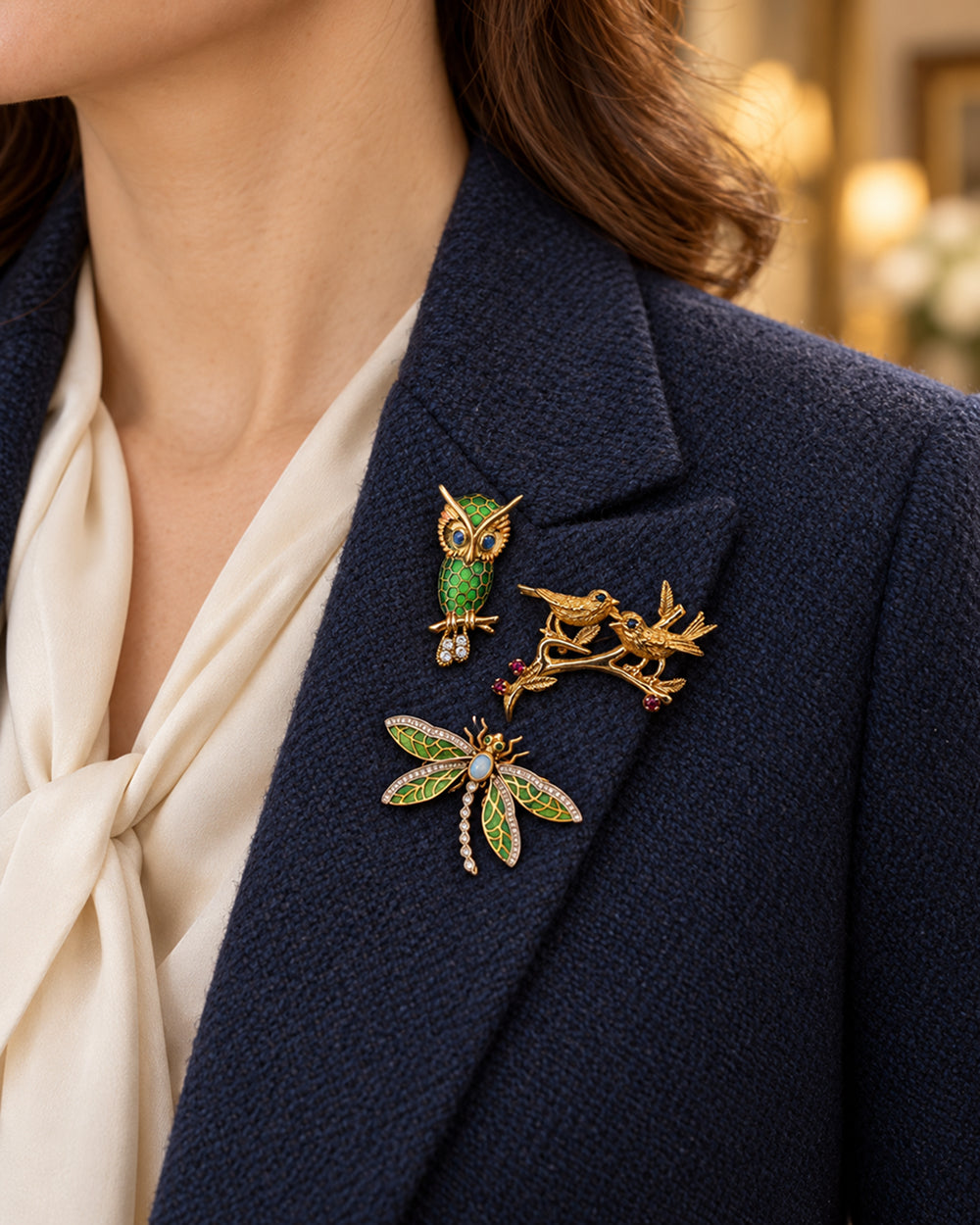
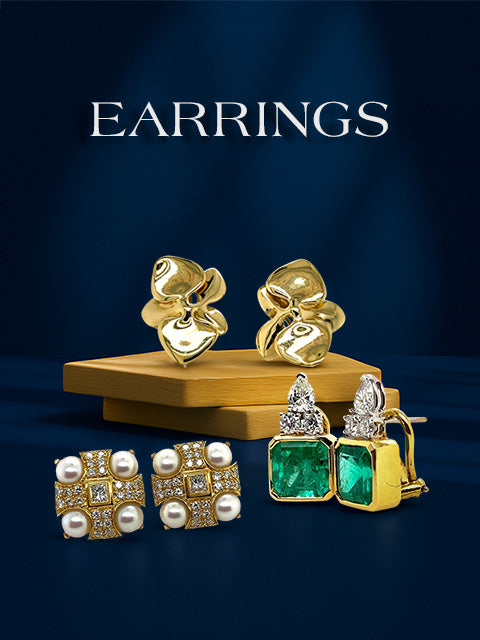
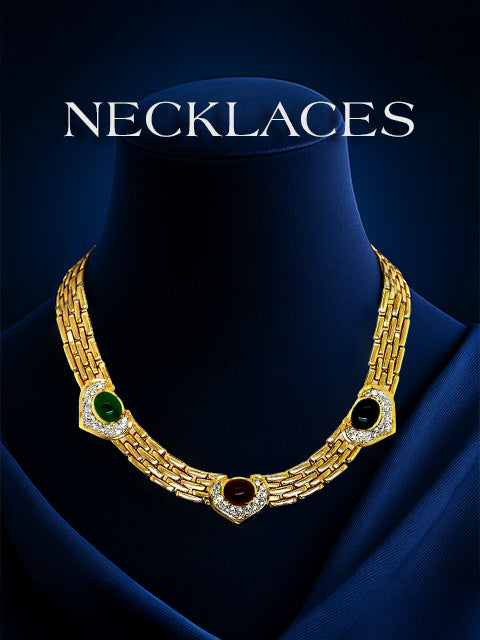
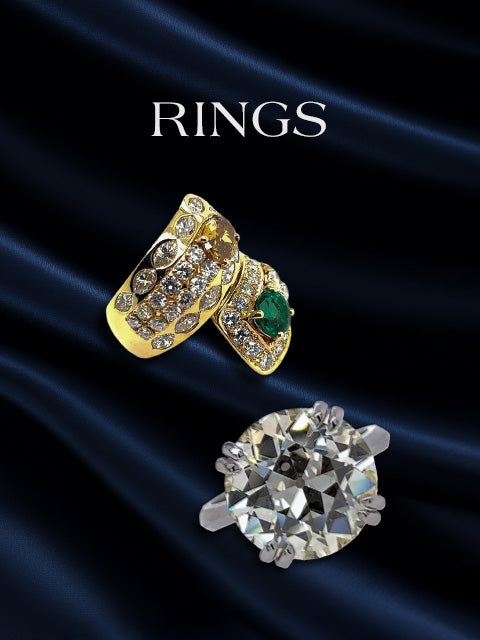
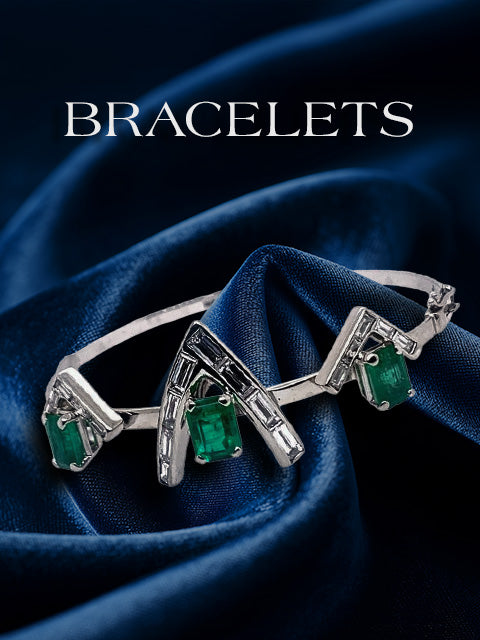
Radiam specializes in custom and estate jewelry and offers pieces ranging from rings and necklaces to brooches, earrings and bracelets. Its collection includes antique and vintage-inspired hallmarks collectors continue to appreciate today, including natural gemstones and older diamond cuts.
The connection isn't about recreating Marie Antoinette's jewelry.
It's about the reason historical jewelry continues to fascinate us.
A jewel can outlive the moment in which it was made.
Styles change. Owners change. Settings sometimes change. Yet an exceptional stone or beautifully crafted piece can continue its story for decades—or centuries.
That is what makes estate jewelry different from something created only for the present.
It already has a past.
And its next chapter belongs to whoever wears it next.
Discover Jewelry With a Story
From old-cut diamonds and statement rings to vintage brooches and estate necklaces, explore pieces selected for their craftsmanship, character and enduring beauty in the Radiam estate jewelry collection. Radiam's current collection spans rings, earrings, brooches and pins, necklaces, bracelets, watches and vintage silver.
Explore Radiam's estate jewelry and find a piece of history ready to be worn again.